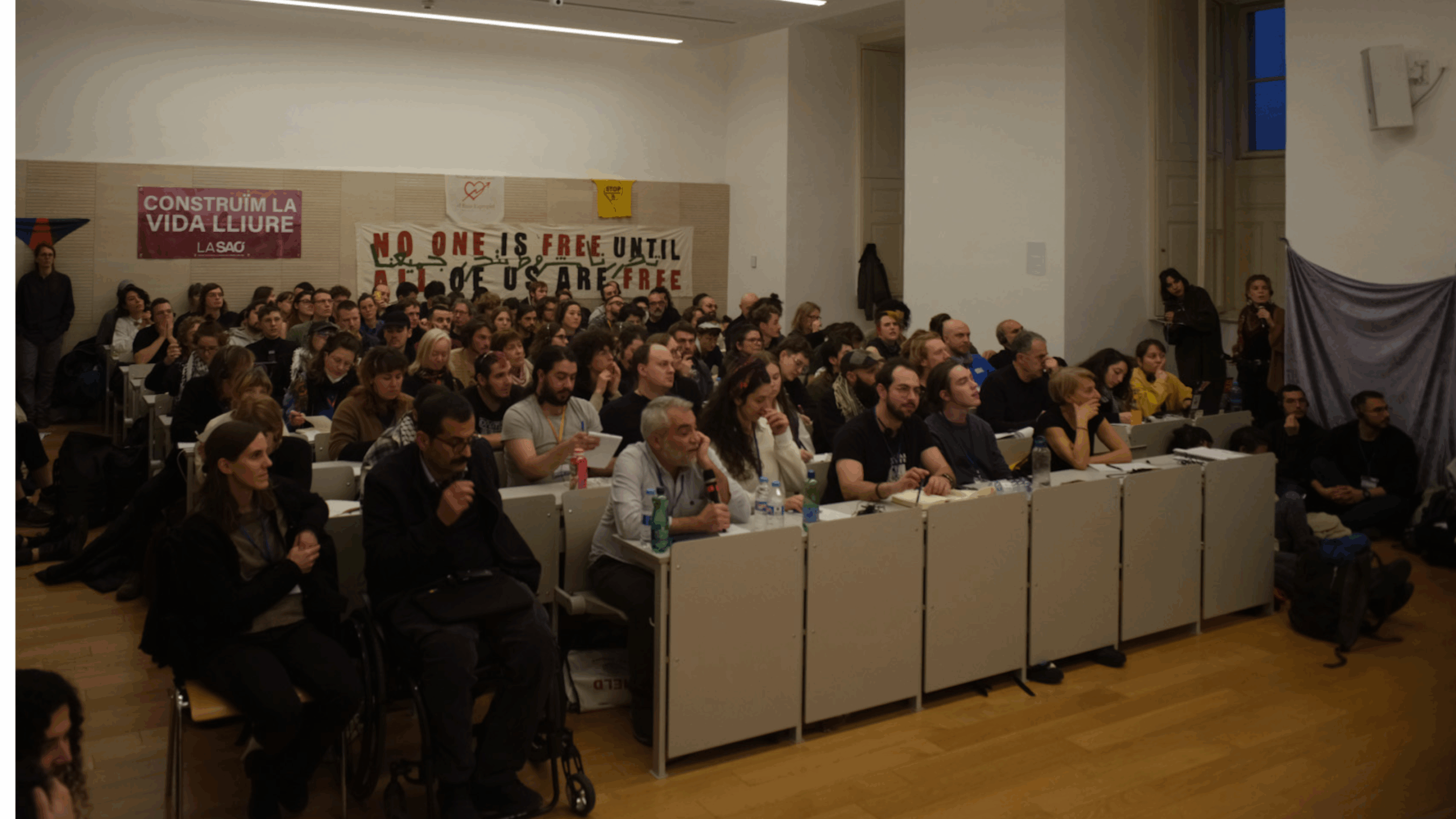
Militancy and organization
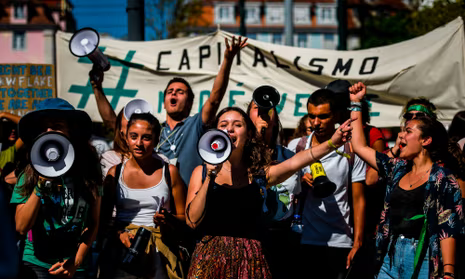
Needs for a long-term struggle rooted insociety
Opening the work of the 7th workshop, we present our reflections around its core topics and clarify the meaning of some concepts we decided to adopt. The reason is to avoid those misunderstandings that can come out in the discussion from using different definitions for the same word.
What do we mean when we talk about militancy?
We do not use the word ‘militancy’ lightly. To us, to be a militant does not mean devolving a few hours of the day to a cause. Neither is a matter of the number of hours one spends acting altruistically. Choosing militancy is taking a historical responsibility before society to dedicate oneself as best as possible to help it reach freedom. We cannot understand militancy as a hobby but a life spent embodying certain values and principles. Therefore we understand militancy as deeply connected to the will to change and educate oneselves as well as to work on our own personalities for that we are able to support the revolutionary process of society the best.
Which values and principles are the foundation of ethical militancy?
Revolutionary militancy defends sociallife, namely, is defending those shared values and principles rooted in the history of society. The interpretation of militancy must be shared between militants and society, as the former must understand themselves as part of the latter. A militant, though, should be part of society dialectically, avoiding its objectification and embodying communal values in the firmest way possible. In the experience of the Kurdistan Freedom Movement, specific characteristics of the revolutionary personality should be developed according to the context. They answer questions such as: How should one behave towards society and comrades? How should be life and struggle? Which aspects must one develop and constantly strengthen during the struggle? To be militant means to have an ideological stance pointing out the lack of truth in capitalist modernity that favors individualism over society. Being militant in the sense of democratic modernity therefore means to understand ourselves as truth seekers in answering the fundamental questions: How to live? What to do? Where to start? The answers that we find for these questions will shape our lives.
What is the role of the organization?
Firstly, we distinguish between the vanguard organization and the organization of the society. The self-organization of the society is the actual goal of a revolution; the organization of militants, instead, can be seen as a tool in this sense, and not as a goal in itself. The vanguard organization serves as a guide for its members and provides them with a compass for the struggle, as well as the basis for constant critical reflection. Still, the development of personal initiative is crucial. A cadre without initiative can only merely be a task fulfiller for a movement, while revolutionary personalities emerge from self-organization. Intensive self-education must take place to develop the self-confidence of militants in thought and action. Self-organization lives from individuals who are self-confidently proactive and courageously take on responsibility. It is the only path for an organization to grow healthily and organically. Nobody should join an existing movement to avoid the challenges of self-organization because any movement should encourage each individual to self- organize.
What is the relationship between organization, leadership, and democracy?
To organize is to grow stronger, as the possibilities of a coordinated group are incommensurably more than the individual ones. That means that being part of a democratic organization is to increase personal freedom and should not be seen as a burden. The most effective militants are the ones who are best organized and carry out the most successful actions. Just as they know that they cannot survive without water and air, they must understand that they cannot live without organization and, accordingly, they must develop an understanding of the need for organization. For a militant, disorganization should be the worst problem.
Yet, as far as we are talking about ‘vanguard’ and ‘cadres,’ it is crucial to problematize why there can be a negative association with those terms in some circles. Some interpretations of the Marxist- Leninist paradigm understand the vanguard as the ones that walk at the head of society, embodying the risk of authoritarianism and disconnection from society. This completely justified critique, however, leads the leftist circles to avoid the discussion around the question of leadership. The liberal thinking that followed the collapse of real socialism, based, for example, on the “end of history,” was not only directed against the idea of socialism and the belief that another world is possible but also proclaimed the “end of the era of vanguard socialist parties and organizations.” Concepts such as party, organization, leadership, vanguard, and unity have been branded as enemy symbols, partly because of the mistakes made in the name of socialism. However, on the one hand, one must insist on overcoming state-oriented parties, and on the other hand, it is necessary to devise new theoretical models for parties or organizations as fundamental instruments of struggle. Because social construction is only possible with organized power, the form of which varies according to the temporal and local context. Avoiding such reflections paves the way to informal hierarchies: in groups pretending to be ‘totally horizontal,’ patriarchal personalities find the doors open for their domination. In these groups, one struggles to trust each other in giving and taking responsibility. That is why it is important to openly address the discussion and distinguish between power-based and democratic leadership and authority. Profound understanding of social values characterize the latter; it must come with a living example of these values and carry the highest responsibility within the group. A democratic leader is an example for the comrades to educate and organize themselves and to act according to the revolutionary purposes.
What is the relationship between militant organization and paradigm, theory, program, strategy, tactics, and action?
Any revolutionary organization aims to solve the problems of its society; to accomplish its duties, it needs to actively develop the above six principles of revolutionary life and organization.
By consciously choosing a paradigm, we mean that an organization needs to have the necessary way of thinking and faith to endure, resist, and find solutions under any condition. Peoples deprived of a holistic paradigm can be easily exploited and controlled by those groups that shape the dominant worldview. To act strongly, one needs a comprehensive and solid worldview, as the ability to interpret, explain and understand things is a fundamental tool for bringing about change. For a militant, it is about internalizing a non-positivistic paradigm and allowing it to become the decisive criteria for thought and action.
The next step is to develop a solid theoretical understanding of the fundamental facts and problems of the context and their possible solutions. The theoretical work doesn’t lose its
importance: the more the revolutionary practice grows, the more this field of work will become an indispensable need. The intensive development of the theoretical level of all militants is thus an enduring necessity.
When we have a scientific understanding of the present conditions, we are still not in a position to change them. Our practice will easily crash if we do not set clear and broad goals and clarify where we want to get to and how. A revolutionary program means to give a clear answer to what needs to be changed, how, and what we need to build instead. If militants do not understand what they are fighting for, and if they only carry out actions without knowing their goals, they will be constantly busy with practical work, but they will never understand the aim of their practice. If they think it is enough to describe their goals with abstract concepts, they will not be capable of setting a consistent alliance policy and attitude toward the enemy. Without defining our boundaries, one cannot achieve the established goals.
To realize our programmatic goals, we must clarify a basic strategicline. It involves identifying the main friendly and hostile forces during a specific revolutionary phase. Strategy changes as the revolution proceeds but remains essentially unaffected throughout the entire period of a given stage of it.
It is the struggle that carries out this line by replacing the old forms of struggle and organization with new ones, the old slogans with new ones, by combining these forms. Tactics put the strategy into practice. It addresses the questions: What plan of action will enable us to implement our line? What forms of organization and actions correspond to our strategic line?
It is important to see the connection between these elements as grading with increasing flexibility; it means that in front of a high rigidity in internalizing a non-positivistic paradigm, militants should be highly flexible in changing forms of organization and actions according to the present state of objective and subjective conditions. Problems arise when one counterposes these elements with each other: when militants focus too much on just one or a few of them, rejecting or postponing the process of developing the others. They are holistically connected; militants cannot start with one but must focus on all of them. Nevertheless, there can be moments where we must stress one more than the others. There is a dialectical relationship between them: lessons learned from the concrete struggle must feed into theoretical reflections and lead to ideological development. Continuous criticism and self-criticism and seeking to prevent dogmatism should help us pursue unity between theory and practice.
What is preventing us from developing an effective struggle in Europe?
In Europe, we are used to building many forms of organization, from campaigns to small collectives, cooperatives, and parties. Still, we can see our organizations lacking one or more of the seven previous principles or misunderstanding them. Ideological rigidity and political flexibility would be the approach that is supporting the revolutionary process. However, we see many leftist groups pursuing the opposite: ideological flexibility and random rigidity in policy implementation. For example, we face increasing left-wing support for liberal and orientalist theses while engaging in endless polarized discussions around the ill-posed question ‘Which are our practices?’ and divide themselves into groups according to the different answers.
The lack of a deep-rooted holistic perspective that we see today leads to particularistic strugglesfeaturing periodic campaigns that do not involve continuity and long-term perspectives. Activism specializes in singular topics, shying away from connections with other problems of
society. Groups and activists thus tend to isolate themselves, acting, thinking, and feeling as if they exist on an island whose practices do not connect to the rest of the world. In this way, they try to build closed communities that could defend them from the alienation of modernity instead of representing an example of a solution for social problems.
These are the outcomes of specific attacks from capitalistic modernity; when one is convinced to be powerless, one loses the possibility of seeing the organization as a subject in the political field. That is why European militant and organizational agendas often follow that of those in power. They lack awareness about their exploitation, which takes place every day in various ways. It leads to a Eurocentric and metropolitan chauvinist attitude. Since people here feel ‘free,’ they assume to be in a position from where they can only show solidarity with movements in the Global South without reflecting on their own lives. Instead, true life is resistance, and free people are those who fight, whether in Kurdistan, Palestine, Abya Yala, or Europe, while living unaware of their oppression in the center of capitalist modernity is closer to slavery than freedom. We lack precise methods to address the different layers of oppression. There is no clear answer to how to tackle colonialism and patriarchy without remaining in complaints. The absence of clear stances on the questionofthe state is a cause for these problems. It runs movements into appropriation by state institutions, into assuming social engineering methods and culture, and generates an NGO-ization of resistance.
The same alienation from European reality appears in the leftist lack of accounting for the richness of previous socialist experiences in Europe; we must conduct ideological critiques, yet there is a lot we can learn from those experiences. For example, the centrality of values and principles; while liberalism persuades us that a shared moral would hinder the free expression of the individual, we can see how morality is what holds the social texture.
Fighting for the freedom of our society requires being deeply connected to it and loving it. It means knowing its history and understanding where we come from and what has brought us here today. In any society, women are those in charge of reproducing life and community, protecting and transmitting values through care work. Many revolutionary women were schoolteachers, and we should take this work more into account, both continuing self-education in the theoretical sense and putting educational work as a central part of developing organizations.
In every society – either in historical or recent matricentric ones or in the patriarchal societies of capitalist modernity – women are responsible for giving and maintaining life and community, protecting and transmitting values. Today, this is framed under the term care work. Many revolutionary women were teachers, mothers, and deep connoisseurs of nature, plants, and animals. We should give more consideration to this work, whether it is continuing self-education in a theoretical sense and putting educational work at the center of organizational development or the ability to give and maintain life, knowledge, and connection with the living world around us.
Ideas to overcome this situation?
Whatever the type of organization, we should push a higher culture of militancy as a responsible lifestyle choice that is not just limited to that specific organization but aims to build democratic modernity.
The reasons for the weakening, or even the collapse, of leftist groups, are often related to patriarchal mindsets. Therefore, it is necessary to internalize the principle of women’s liberation in the deep sense of pursuing a paradigm shift from positivism to an ecological one: a paradigm that defends life by embodying the liberation of all genders through women’s liberation with the tool of
autonomous organization. Indeed, a woman-centered perspective can bring us to a political culture that emphasizes similarities, not differences, to counteract our fragmentation.
From there, we must develop clear definitions and implementations of the principles of revolutionary life, mainly focusing on translating theories into programs. So, we could start focusing on positive rather than negative tasks. Instead of just protesting against the elements of capitalist modernity, our organizations could then build their alternatives within the system and start to organize society more humanely. From the experience of the Kurdistan Freedom Movement, we can see how strong autonomousorganizationof women and the youth – both in the ideological and organizational sense from the grassroots – and mechanisms such as co-presidency are significant to lead long-term struggles. To implement these, we thus need to internalize a correct understanding of autonomy from the outset, which does not mean independence from wholeness.
What do we need to build the Peoples’ Platform Europe?
It is the goal of our forthcoming discussion, and here we want to suggest a few points to start it. We think a revolutionary personality should grow rooted in one society but aim to act self-confidently across borders. We see internationalist exchange as strategic to learn and be inspired by other experiences and gain hope and strength for everyday practice.
In the present state of things, Europe of states plays a role as a whole without really solving its internal contradictions. We will probably face times when the capitalist powers will turn the European nations against each other while they will increase their domain over us all. Therefore, we need a joint program to counteract future scenarios. In the current European situation, there is no possibility, nor the need, to develop a common ideology; yet, we can start thinking and writing down a coordinated draft about how we imagine a democratic Europe and a way to exit the present state of war. We could set regular meetings of delegates to develop a joint political situation analysis and develop an academy to ensure a Europe-wide exchange. By sharing and deepening knowledge about our respective regions, we could build a deep understanding of what is attacking us and how to resist.
In creating a framework at the European level, we would like to account for the experiences of the past decades. There have been various approaches and attempts to establish forums for social movements. However, they had theoretical and structural shortcomings: we should learn from past mistakes. We can conclude that adherence to certain principles is a prerequisite for participation and co-creation in such platforms. The minimum consensus should be anti-capitalism; we can build common denominators and alliances based on this principle.
Then, if we pay attention to the differences between social institutions’ networks and vanguard organizations’ ones, we could more easily develop our organizational purposes. Just as in every local and regional context, a European platform could also develop a perspective in “organizing, education, and action” as areas of responsibility.